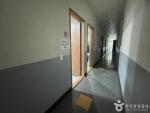
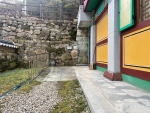
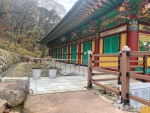
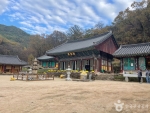
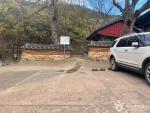
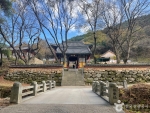
It was founded in 914 by National Master Boyang and revived in 1419 by Master Cheonil. Its name comes from a legend that a dragon rose to the sky from the pond at the temple entrance. The temple has the Geumgang Gyedan (precepts platform), which enshrines the Buddha's true relics, and the Jeokmyeolbogung, which has no Buddha statue. The Geumgang Gyedan, the three-story stone pagoda, Geungnakjeon Hall and the wooden Amitabha Buddha triad are designated cultural heritage. The forest path to the Jeokmyeolbogung connects to a Biseulsan Mountain hiking trail. The temple is always open, and parking is available.
Source: Korea Tourism Organization · KOGL Type 3 (no changes allowed) · 6 photos
6 photos ↓ · Source: Korea Tourism Organization · KOGL Type 3 (no changes allowed)
Yongyeonsa Temple (Daegu) Today
Worked out per date
Nov 2 (Mon)
Open at all times
Sources: Hours and closed days: Korea Tourism Organization
Why does the Jeokmyeolbogung at Yongyeonsa Temple have no Buddha statue?
The object of worship is the Buddha's true relics enshrined at the Geumgang Gyedan, so no Buddha statue is placed in the Jeokmyeolbogung.
Can I climb Biseulsan Mountain from Yongyeonsa Temple?
Yes. The forest path to the Jeokmyeolbogung connects to a Biseulsan Mountain hiking trail.
When was Yongyeonsa Temple founded?
It was founded in 914 by National Master Boyang and restored in 1419 by Master Cheonil. The halls burned during the Imjin War were rebuilt one after another afterward.
Source: Korea Tourism Organization TourAPI
Yongyeonsa Temple (Daegu) sources
Photos
Korea Tourism Organization · KOGL Type 3 (no changes allowed)