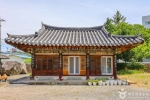
Hwajangsa Temple is a branch temple of Donghwasa Temple, founded around 1925 at the vow of the lay devotee Bowon, Kim Yeong-ok, and rebuilt in the 1980s by the monk Jiu.
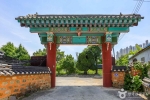
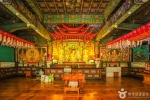
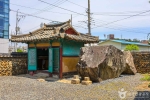
In the main hall, Geungnakbojeon, there is a small jade Amitabha Buddha that appears to be from the Silla period. The temple grounds have 3 dolmens belonging to the Cheonnae-ri dolmen group (a Daegu Metropolitan City monument), and the wall has 1. The temple is always open, with no admission fee or parking fee.
Source: Korea Tourism Organization · KOGL Type 3 (no changes allowed) · 7 photos
7 photos ↓ · Source: Korea Tourism Organization · KOGL Type 3 (no changes allowed)
Hwajangsa Temple Today
Worked out per date
Nov 2 (Mon)
Open at all times
Sources: Hours and closed days: Korea Tourism Organization
Which sights in Daegu can I walk to from an urban railway station?
Hwajangsa Temple FAQ
Why is the Amitabha Buddha in Geungnakbojeon at Hwajangsa Temple small compared with the building?
It is the statue that was enshrined in Yonghwajeon, the original main hall, and was moved to Geungnakbojeon when the temple was rebuilt. It is thought to be a Silla-period jade Buddha.
Can I see dolmens at Hwajangsa Temple?
Yes. There are 3 dolmens in the temple grounds and 1 in the wall, belonging to the Cheonnae-ri dolmen group (a Daegu Metropolitan City monument).
What halls does Hwajangsa Temple have?
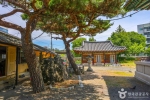
It has Geungnakbojeon, Wontongjeon, Chilseonggak, the Iljumun gate and Yosachae. A Geungnak hoesangdo taenghwa (Buddhist painting) hangs on the back wall of Geungnakbojeon.
Source: Korea Tourism Organization TourAPI
Hwajangsa Temple sources
Photos
Korea Tourism Organization · KOGL Type 3 (no changes allowed)




 Dalgubeol Horse Riding Parkstraight-line 1.7 km
 Daegu Arboretumstraight-line 1.7 km


 King Kong Gallery Cafestraight-line 1.5 km
 Midamstraight-line 1.8 km


